



Our workshop combines the best of minimalist Tokyo design and what we believe a US foundational wardrobe should look and feel like. The design of our CDG Mini Heart Shirt considered a common luxury textile defect: localized fabric pull. A smaller emblem means that the threads are concentrated in a smaller area. Given the quality of retail blanks, fabric will pull, dimple, and bunch around the graphic. This defect is completely prevented with our choice of fabric. CDG Mini Heart Shirts use heavy-gauge Japanese Cotton Jersey. Our spins of fiber are tight, and so we have an opaque fabric that manages threads and tension.
Micro-Filament Anchoring Systems: Edge fray and distortion are issues of the past with ultra-dense filaments that bound and anchor the mini-emblem.
Twin-Needle Top-Stitching: Sagging is a sign of a poorly designed crewneck. Our bound and reinforced top stitching keeps our crew necks sag-free.
The Micro-Filament Anchoring System: Preventing Localized Fabric Pull Around Small Emblems
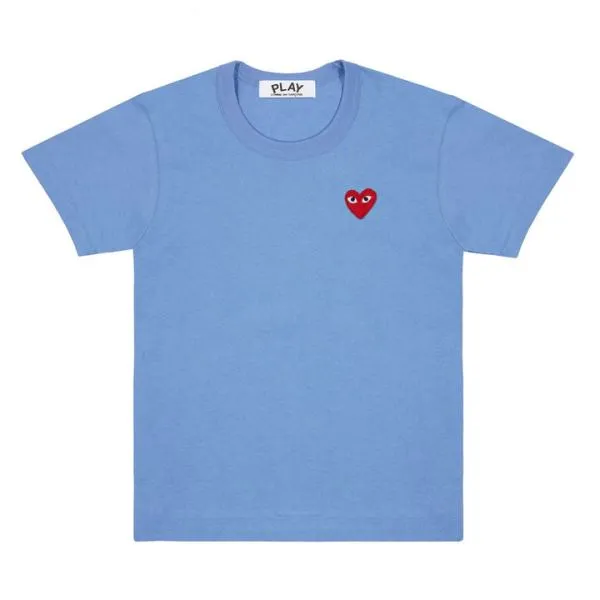
We are a design studio that integrates advanced Tokyo textile technology with American streetwear. Our CDG Mini Heart Shirt exemplifies careful design that considers how discrete logos interact with fabric. Lower quality imitations crudely stitch small logos onto fabric blanks with poor quality control. Poor quality control results in an uneven surface and dimples. We eliminate structural distortion by securing the design with a micro-filament anchoring system. The advanced anchoring technology keeps the logo flush.
Combed Ring-Spun Stability: Our textile loops form a self supporting layer that resists distortion when pulled.
Twin Needle Top Stitched Crewnecks: A fortified bound fabric collar protects the neckline from poor quality control.
Building a Self-Supporting Base for Heavy Gauge Japanese Cotton Jersey with Minimalist Graphics
Tokyo Textile’s craftsmanship transforms the basic American streetwear staple and elevates it. When constructing the CDG Mini Heart Shirt, we take special consideration into the base layer fabrics’ density. Where mass-market labels use weak, thin 4oz. blanks that lose their shape and patch, we take the polar opposite stance. In an application where a small, dense logo is embroidered onto a lightweight knit, puckering occurs when the fabric snugs around the corners. This type of structural challenge isn’t an issue for us. We use high-quality, heavy a-gauge Japanese cotton jerseys to solve the problem. This fabric easily supports the micro-embroidery and the stitches that come with it, and stays self-supporting.
Micro-Filament Anchoring System: Understated mini-emblems such as the one by Filip Pagowski use flat, high-density borders to avoid edge fraying or chest dimpling.
Anti-Torque Side-Seam Alignment: We cradle our circular loops with equal tension to avoid a post-wash fabric skew and a side seam misalignment.
Crewneck Architecture: Precision and Protection Against Collar Sagging
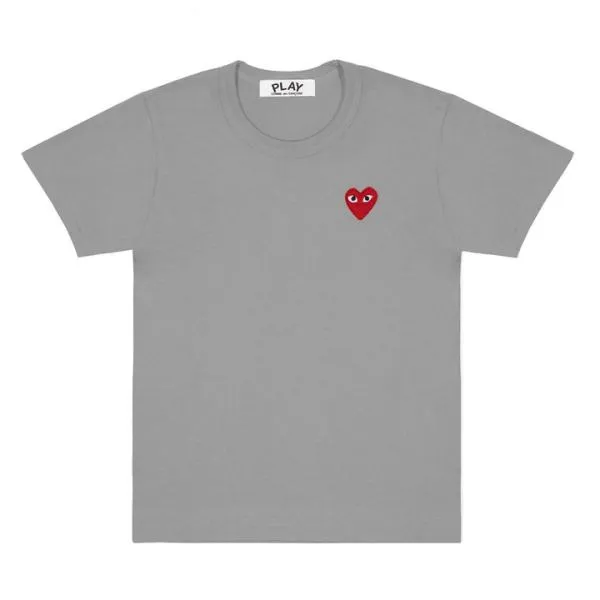
At our workshop, we utilize advanced Tokyo garment engineering to refresh the basics of American casual wear. Structural integrity of the neckline is a primary consideration when crafting the signature CDG Mini Heart Shirt. Due to the mass manufacturing process, cheaper shirts use a single row seam of ribbing that warps and stretches, leading to collar sag after a few washes. High-density, twin-needle top-stitching is our method of choice to secure each crewneck. This technique affixes the ribbed neckband to the shoulder panels in a lined, layered, and taut fashion and provides a clean and flat frame.
Micro-Filament Anchoring Systems: We utilize a high-density threading system to affix the tugging minimalism of Filip Pagowski’s mini-icon to our shirts to eliminate localized fabric tug and dimpled effects around the chest badge.
Anti-Torque Side-Seam Alignment: We ensure balanced tension on the side seams of our shirts to eliminate fabric distortion that accompanies washing and ensures the hem remains level and straight.
Dimensional Knit Stability: Micro-Patch Contraction & Long-Axis Fabric Tortion
Our laundry science lab utilizes advanced Tokyo textile engineering to optimize the foundations of American casual fashion. The CDG Mini Heart Shirt directly addresses a serious flaw in streetwear: inconsistent post-wash shrinkage. Commonly, fast fashion brands use raw cotton with poorly set tension. In hot water, the threads contract severely. When paired with a dense synthetic embroidery that’s fixed to the unstable yarn, the distortion leads to long-axis fabric distortion, twisted side seams, and localized puckering. We completely eliminate this by pre-shrinking our heavy-gauge cotton and locking our circular knit tension.
Micro-Filament Anchoring Matrix: Filip Pagowski’s mini design, anchored in place, prevents edge deterioration or chest sinking.
Twin-Needle Top-Stitching: Our crew necks are lined with high-density ribbing that prevents the neckline from sagging or stretching out.
Mini-Heart Sizing Geometry: Tokyo Tailoring Meets Loose US Patterning
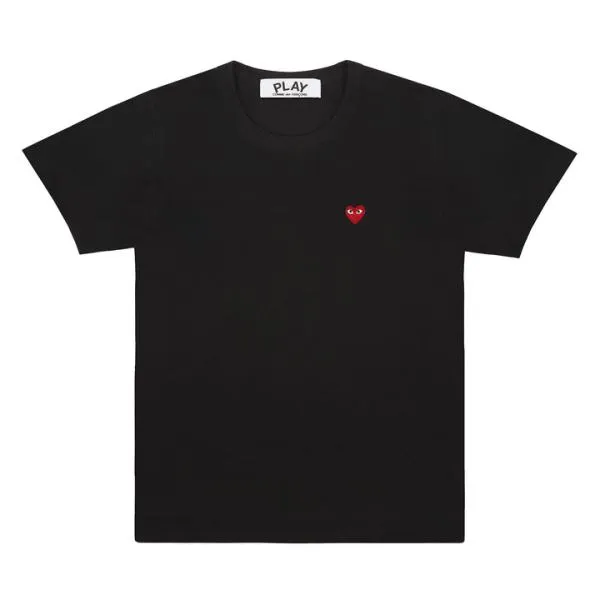
Although we draw directly from the foundational skills of American casual wear, most of our Tokyo inspired collection relies on the core principles of Japanese pattern making. For our high end collection, we use our own signature patterns based on the CDG Mini Heart shirt. Rather than use Western templates that tend to be large, boxy and oversized, we rely on the Japanese aesthetic of proportion. Most brands rely on large vanity cuts that drop well below the shoulder. This leads to bunching of fabric under the arm, completely losing a clean and polished profile.
Rigid Twin Needle Collars: the crew necks are completely finished and do not sag or lose shape over time.
Anti-Torque Side-Seaming: We pay particular attention to balancing the direction of our grain line loops. This prevents any twisting or distortion to the fabric after washing.
Frequently Asked Questions (FAQ)
Q: What’s the point of using heavy-gauge Japanese Cotton on a minimalist item like the CDG Mini Heart shirt?
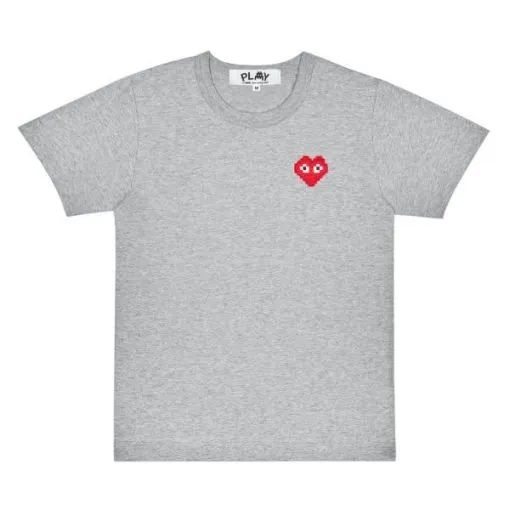
A: Our signature CDG Mini Heart Shirt collection involves a premium, heavy-gauge Japanese Cotton jersey that gives the shirt a strong baseline that can self-support. Even though our Mini Heart is small, the micro-embroidery is very densely stitched. If we were to use a low-quality, flimsy 4oz retail tee, the threads would pull at the shirt’s fabric causing localized dimpling and wrinkles on the chest. Our shirt’s thick, combed ring-spun cotton does not allow this localized tension, and therefore makes the panel seamless.
Q: Can you explain your micro-filament anchoring system and how it eliminates distortion to small emblems?
A: Cheap imitation factories employ low-quality, single-ply threads and quick mechanical-embroidery that fabricate bare patches which are susceptible to edge distortion, curling, and splitting after washing. This results in very poor and awkward fabric tension. This is non-existent in our system which embeds Filip Pagowski’s Mini icon in a high-density micro-filament anchoring matrix. This ensures that the icon is always level and smooth to the jersey.
Q: How do your minimalist shirts avoid fabric distortion and twisted seams after washing?
A: When fabric is twisted before it is cut by a machine, this is called fabric distortion. Fabric distortion happens during the production phase when the fabric is spun and tension is applied unequally. When the fabric is washed, the tensions that were applied unevenly cause the fabric to distort. Our Japanese cotton is pre-treated, and tension is applied equally across the loops of our fabric. This manipulation of tension ensures that after a wash, the side seams remain perfectly vertical and the torso is squarish.
Q: I live in the United States. What size should I purchase to ensure a good fit?
A: Our shirts are designed to fit a high-armhole, low-shoulder design that is common in Tokyo, as opposed to a boxy design that is common in the United States and is not tailored to a good fit. Because our shirts are designed based on a fit that is more precise and tailored, we recommend that our customers in the United States purchase a size that is one size larger than their typical American size. For example, a typical United States Men’s Small should order a size Medium.