

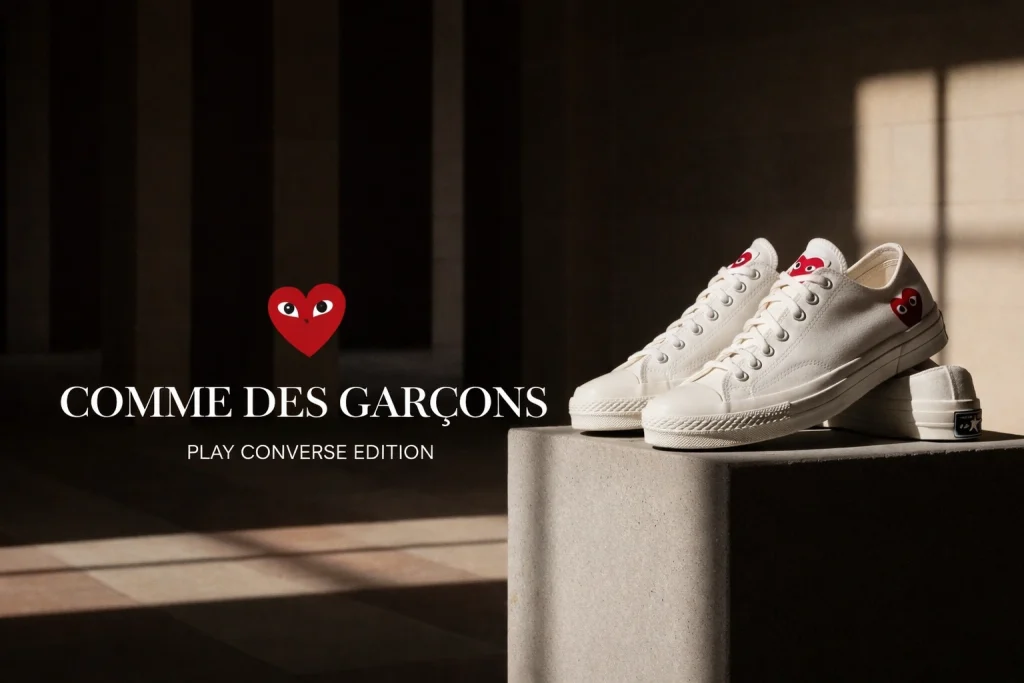
Welcome to our tailor shop, where we bring Japanese innovation to the CDG heart of American casual wear. When designing our knitwear at the atelier, our aim was to create a knit polo that would solve the usual issues experienced with low-quality apparel. These products usually come with low-quality, thin collars that after a few washes roll, warp, or collapse in an unsightly bacon-like fashion. Our solution was to finish the collars with heavyweight, high-tension ribbed borders. The borders of the collar maintain a crisp sharpness, ensuring support for the enthusiasts.
High-Density Flat-Knit Borders: Our border design possesses a rigid edge, and totally resists curling, all without using uncomfortable stiff chemical inserts.
Reinforced Two-Button Plackets: Through the addition of a fabric and a few stitches, we create a flat and stable upper shirt region, and ensure that the placket stays in a desired aligned position.
High-Tension Ribbed Collar Borders: High-Density CDG Polo Shirts US Selvedges vs. Weak Fused Necks
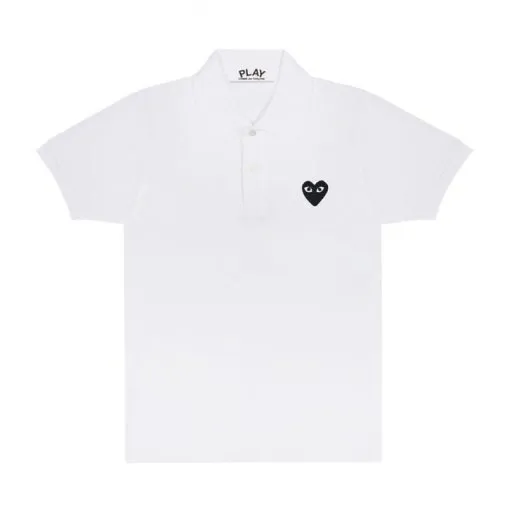
This is not your average runway. Here at our design workshop, we take inspiration from Tokyo tailoring to deconstruct the building blocks of American casual wear. Each of our knitwear offerings is constructed with intricately engineered necklines. That’s how we manage to create something completely unachievable in the realm of Polos. The sad reality is mass-produced Polos are created with synthetic, single-layer, bonded fabrics which come apart after just a few washes. We roll our collars with high-density flat knit selvages, which means our collars have a crisp flat edge that stays flat against your collarbone.
High-Tension Ribbed Borders: A CDG Polo Shirts US tightly-knit ribbed border means our collars can absorb quite a bit of mechanical stretch and maintain a stiff edge.
Stable Two-Button Interlining: A reinforced placket makes our interlining collar base sag-resistant, allowing for a consistently neat neckline under any outerwear.
Two-Button Placket Interlining Stability: Reinforced Top Stitched Buttonholes vs. Collapsing Throats
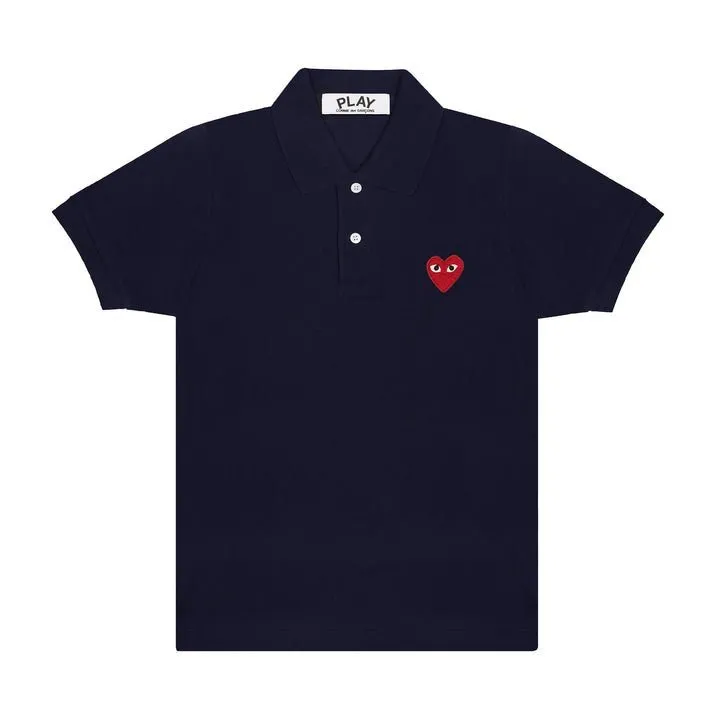
You are entering our geometry workshop, where Tokyo spatial design merges with American prep style. When manufacturing our CDG Polo Shirts, we focus on the throat area, where most knit shirts collapse. Cheap sportswear brands leave neck openings unreinforced, and as such, those openings stretch, and the collar slumps into a sagging throat. We mitigate this by introducing a high-density, two-button placket interlining to each chest opening. This dedicated internal stabilizing system design keeps the chest panel flat, clean, and stable for fashion collectors in the U.S.
Reinforced Top Stitched Buttonholes: Our button openings are reinforced with ultra-dense, structural stitching to prevent stretching and fraying after daily wear.
Pure Mother of Pearl Buttons: We also attach our stiff, strutted buttonholes with fine, guaranteed button closures, ensuring a perfectly geometric, draped throat line.
Knit Matrix Mechanics: Comparison of Long-Staple Japanese Cotton Piqué Mesh and Thin Filament
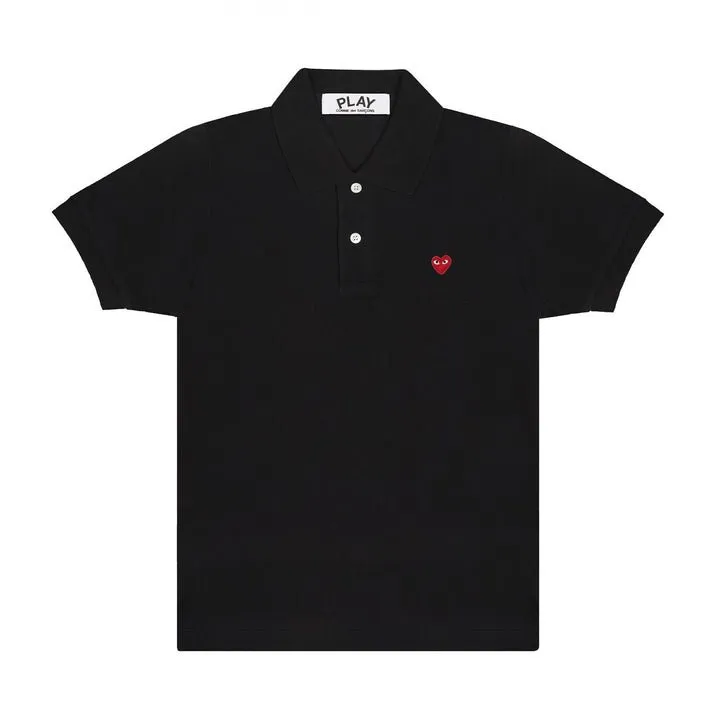
Welcome to our raw textile studio! Here, top-tier Tokyo materials meet the roots of American streetwear. We refuse to use the fabrics found in fast-fashion as the base of our signature designs. Instead, we use long-staple Japanese cotton piqué mesh to construct our custom panels. The CDG Polo Shirts US design uses an open cell microgeometry to create a textured and highly breathable mesh to let heat escape easily. We know that our customers prefer a tailored, flattering shape over the boxy shapes produced in the retail sector, so we use this design to create a structured and solid mesh framework.
Long-Staple Cotton Geometry: The cotton mesh we use has long-staple Japanese cotton that is spun so tightly that there are no coarse ends to the mesh. This helps create a soft surface that remains lint and pill free.
Open-Weave Ventilation: The design of our cotton mesh helps with the wicking of moisture, which helps keep the body dry and cool in a warm American summer.
Dimensional Knit Stability: Post Wash Garment Hem Torque and Thread Contraction
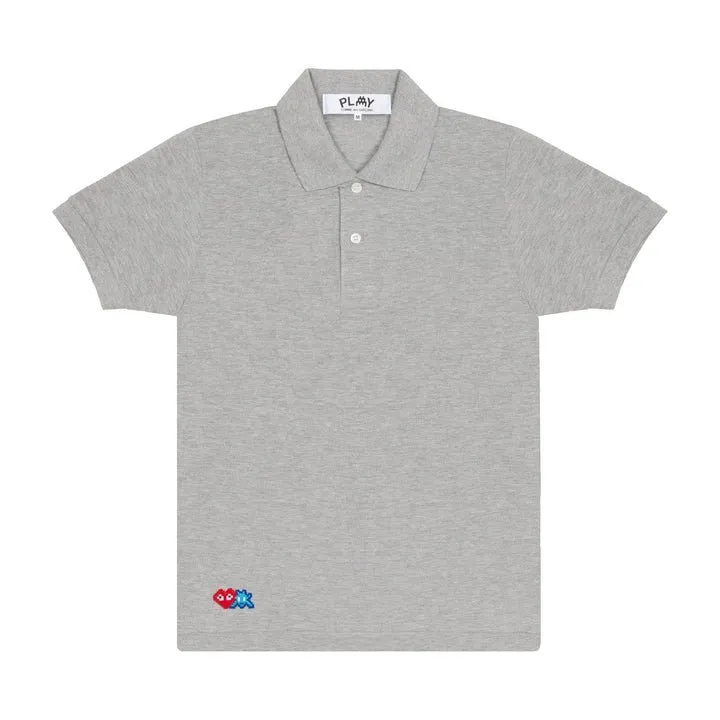
Exemplifying advanced Tokyo manufacturing in our laundry science lab, we optimize our CDG Polo Shirts US to outperform typical American sportswear, which is built to withstand repeated laundering. Our competitors’ standard knit polos exhibit severe thread contraction, resulting in side seam twisting and a warped waistline. Our design eliminates this crookedness by pre-shrinking our premium Japanese cotton piqué mesh fabric and setting the grain lines with balanced tension. The design and construction methodologies balance, level, and square the torso, appealing to style collectors in the United States.
Grain Alignment to Prevent Torque: After construction, circular knit grain loops are aligned in opposing directions, preventing side seams from pulling and/or twisting around the hips, even after laundering.
Thread Stability Using Low Heat: Aggressive heat causes contraction to our long-staple cotton threads. We ensure that our hemlines maintain their original length with no unsightly puckering or shrinkage.
Frequently Asked Questions (FAQ)
Q: Why do Comme des Garçons Play polo shirts use heavy tension ribbed borders instead of thin, standard collar bands?
A: To tackle the “bacon collar” phenomenon, our polo shirts use high-density, flat-knit ribbed borders. Cheap polos use thin interlinings that fuse and warp after a few washes, leading to misshaped polos. Our ribbed borders provide self-supporting frames that remain clean and flat after many washes, unlike cheap substitutes that require chemical stiffeners to hold their shape.
Q: What’s the best way to wash my polo to protect the embroidered heart from wrinkling or puckering?
A: The heart is securely embroidered since we strategically used a high-density filament thread matrix to ensure tightness. While there is no chance of the heart puckering, there is a chance of the surrounding fabric puckering. The best way to ensure that doesn’t happen is to turn the CDG Polo Shirts US inside out before washing. Use the gentle cycle with cold water and a mild, safe detergent. The polo should be laid flat to air dry. Never tumble dry the polo. High heat is a sure way to puckering since the surrounding fabric is a cotton mesh that shrinks at a higher rate compared to the polyester used to make the heart.
Q: I live in the United States. What size should I buy to make sure it is comfortable?
A: The apparel you see on the site is made to a traditional Tokyo sizing scale. That means the apparel is made to a more fitted scale that is more narrow through the shoulders and more fitted through the arms. Because of this scale, we recommend that customers in the United States buy a size larger than what is usually purchased from the standard American brand sizing. For example, if you buy a size Medium in American apparel, buy a size Large in our apparel.